
The Sew-In Directory — August 2, 2026
Sew-In Hair Buying Guide for DFW: Bundles, Raw Hair & What Stylists Require
Choosing the right hair bundles for sew in installations is just as important as choosing the right stylist — and in the DFW market, where service menus range from $65 traditional installs to $1,050 luxury extension systems, arriving at …
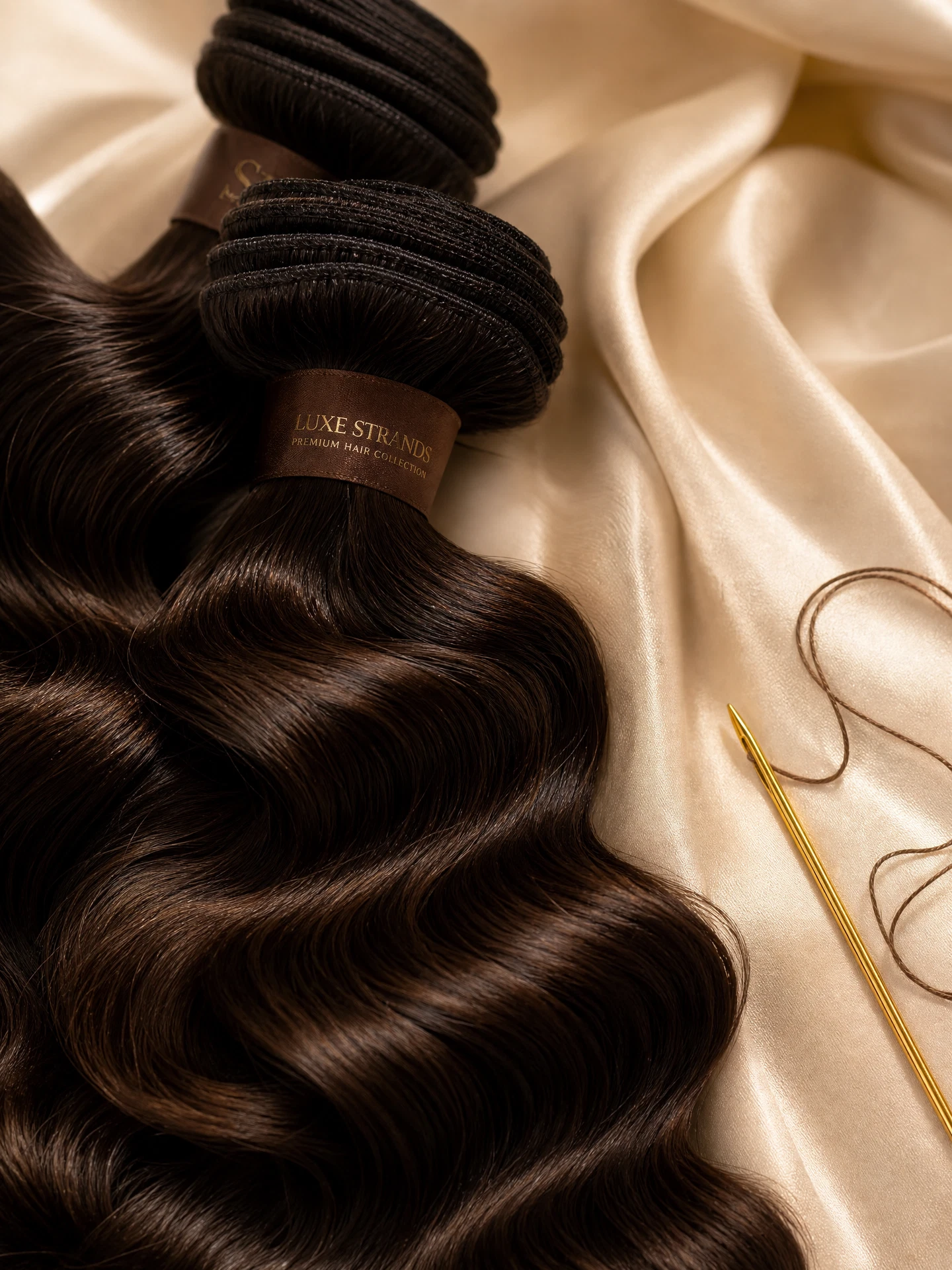
Choosing the right hair bundles for sew in installations is just as important as choosing the right stylist — and in the DFW market, where service menus range from $65 traditional installs to $1,050 luxury extension systems, arriving at your appointment prepared can mean the difference between a flawless result and a costly redo. Whether you are booking your first weave or upgrading to raw hair for the first time, this guide walks through everything you need to know about bundle types, bundle counts, and what Dallas-area stylists expect you to walk in with.Knowing how many hair bundles for sew in installations you need — and what type of hair to purchase — is just as critical as selecting the right stylist. In a market as active as Dallas-Fort Worth, where service prices span from $65 traditional installs to $1,050 luxury extension systems, arriving to your appointment prepared can mean the difference between a flawless result and a costly redo. Whether you are booking your first weave or upgrading to raw hair for the first time, this guide walks through everything you need to know: bundle grades, bundle counts by length, and how to navigate the BYO-versus-house-hair question before you sit down in the chair. Browse the full DFW stylist directory anytime to cross-reference stylists as you plan.
Raw Hair vs Virgin Hair vs Processed: What the Labels Actually Mean
The hair extension market uses terminology loosely, and understanding the distinctions protects your investment. Raw hair is widely considered the highest quality available. It has not undergone any processing or change in any form — collected directly from the donor, often from a single source, meaning all cuticles remain intact and the hair retains its original texture, color, and quality.
Virgin hair, by contrast, is 100% human hair with all cuticles intact and has not yet undergone chemical treatments such as dyeing or perming. The critical word is "yet" — virgin hair can go through steam or heat processes to form different textures, and many manufacturers today still treat it with chemicals to make it shinier. This is why two bundles labeled "virgin" from different vendors can behave very differently after washing.
Processed hair is often collected from multiple donors, then chemically treated to remove cuticles — primarily to reduce tangling — and subsequently dyed, permed, or treated with silicone to create a specific texture, color, or shine. Processed hair is not synthetic, but it is the most altered form of human hair and carries the shortest lifespan of the three tiers.
On the question of durability: with proper care, raw hair extensions can last two to three years, making them a long-term investment. Virgin hair is a bit more resilient than processed hair, but because it can undergo light steaming, it is not as resilient as raw hair — and depending on how often you style and maintain it, virgin hair can last a little longer than a year.
For budget-minded clients who change their style frequently, virgin hair can be a good choice if you like predictable styles, change looks often, or do not want to invest in raw hair yet. For clients who want to reuse bundles across multiple installs, raw hair is the stronger choice.
One practical note on color: if hair only lifts to a honey blonde, it may be processed. This is a meaningful difference between raw and virgin hair — virgin hair will usually not achieve the same level of lightness as raw hair. If a platinum blonde or fashion color is part of your vision, communicate that to your stylist before purchasing bundles.
How Many Bundles for a Sew In: A Length-by-Length Breakdown
The number of bundles you need is driven primarily by length, because hair is sold by weight — typically 100 grams per bundle — so the longer the hair is, the shorter the weft will be. A 24-inch bundle has a much shorter track than a 12-inch bundle, which means the longer you go, the more bundles you need.
As a general framework: 2 bundles for 8–14 inches, 3 bundles for 16–22 inches, 4 bundles for 24–30 inches, and 5 bundles for 32 inches and above for a full sew-in.
Texture matters too. Straight hair is sleek and lies flat, so it often requires more bundles to achieve a full appearance — for most straight sew-ins, three to four bundles work well depending on the length and desired thickness. Wavy hair offers a bit more natural volume, so two to three bundles are usually sufficient — the waves add body, reducing the need for additional bundles.
Using a closure or frontal also changes the count. When using a closure, you'll generally need fewer bundles — for shorter lengths of 10 to 14 inches, two bundles paired with a closure usually suffice. A 13x4 lace frontal covers the entire hairline from ear to ear, which means less scalp requires bundles — you can typically use about half a bundle less when wearing a frontal compared to a standard leave-out sew-in.
| Hair Length | Style Type | Bundles Needed |
|---|---|---|
| 8–14 inches (bob/short) | Any | 2 bundles |
| 16–22 inches (medium) | Leave-out or closure | 3 bundles |
| 16–22 inches (medium) | With lace frontal | 2–2.5 bundles |
| 24–30 inches (long) | Any | 4 bundles |
| 32 inches and above | Full sew-in | 5 bundles |
| Any length | Partial / half up-half down | 1.5–2 bundles |
This table reflects general industry guidance. Your stylist may adjust based on your head circumference, braid pattern, and density preferences — always confirm at consultation.
Stylists That Provide Hair in Dallas vs. BYO Bundle Policies
In DFW, the majority of sew-in stylists operate on a bring your own hair (BYO) model — meaning their service price covers the installation labor only. This is the standard across the Dallas sew-in market, and understanding it prevents sticker shock at checkout.
That said, a small number of DFW professionals accommodate raw hair installations specifically — and one of the most notable is Alyson at Dallas Hair Extensions, based in Northwest Dallas. Her menu explicitly lists a Traditional Sew In w/ Raw Hair at $155, signaling that she is experienced and equipped to work with raw bundles from client-sourced vendors. Her full service range spans $155 to $550, covering everything from Traditional Sew In to Micro Link Install and Closure Wigs — making her a strong option for clients investing in premium bundles who want a stylist that understands raw hair behavior.
Farrah Johnson at Kustom Made Beauty in Dallas offers a focused, polished menu running $200–$260, including Lace Closure Sew In, Traditional Sew In with Leaveout, and Lace Frontal Wig installation. Her price point reflects the precision work expected when clients arrive with higher-grade hair.
For clients in Irving exploring sew-in services near Irving, Susan Jones at Solex Salon prices services from $150 to $265 and offers Invisible Part Sew In, Closure Sew In, and single-track installs — a versatile menu suited for clients with varying bundle counts.
In Plano, Keisha Brown at The Hair Length Studio runs one of the most accessible price ranges in the northern suburbs ($60–$500), with partial, full, lace closure, and quick weave options all listed — making her a practical landing point for clients testing a new bundle grade for the first time. Essen Gilbert at ExquisitelyLacedLLC in Plano prices from $100 to $550 and includes both Traditional and Glueless Closure Sew In options.
Over in Grapevine, explore the Grapevine sew-in hub where stylists like Yolanda Price at Best Lil' Weave House in Texas ($140–$160) and Joy Williams at The Vine Salon and Spa ($200+, specializing in Hidden Bead Sew Ins) represent opposite ends of the technique spectrum — one traditional, one extension-forward. For Mesquite clients, The Dallas Extension Club prices from $185–$275 and includes a specialized thinning/balding sew-in option, a service that requires precise bundle placement and is worth confirming hair compatibility in advance.
For a broader comparison across all listed service providers, visit the full stylists index and filter by city.
Choosing Hair Bundles That Match Your Sew-In Style
Not all bundle types work equally well across all sew-in methods. For a traditional sew-in in Dallas with a leave-out, the leave-out section needs to match your bundle texture — a mismatch in curl pattern is one of the most common complaints stylists field. If your natural texture is tightly coiled, a straight virgin bundle will create a visible disconnect unless flat-ironed at every appointment.
For fuller protective styles like a full sew-in — available from providers such as Jermaine Clark at Hair Bear Collection ($120–$475, offering Full Sew In, Natural Part, Closure, and Invisible Part options) and Danyelle Westbrook at The Village Salons ($120–$450, with a Traditional, Closure, and Full Sew In with Bangs menu) — raw or high-grade virgin bundles are the smarter investment. You'll be wearing the hair longer and likely washing it more frequently, which is exactly the use case where bundle quality separates itself.
For quick weaves and shorter-term styles, processed or mid-grade virgin hair performs adequately and keeps costs down. Providers like Montaya Victoria in Irving ($100–$200) and Elevay1109 in Mesquite ($99–$215) offer approachable price points that make sense for clients who rotate styles seasonally. Explore the Irving sew-in directory and Mesquite sew-in directory for the full rosters.
One final consideration before your appointment: always ask whether your stylist has a minimum bundle requirement. Some techniques — particularly Vixen Sew-Ins (offered by Damaris at Damaris Beauty Parlor, $195–$245) and Ciara Coleman's Microlink Sew-In at Girl Code Pro ($160–$315) — require specific bundle configurations that differ from a standard install. Confirming in advance ensures you arrive with exactly what the service demands. Browse more guidance in our related post on sew-in maintenance and care tips.
Good to Know
Frequently Asked Questions
Keep Reading
Related from the Journal
Your First Sew-In: What to Expect, What to Bring & How to Prep (Stylist-Informed)
Getting a sew-in for the first time is one of those experiences that feels intimidating until you know exactly what to expect — then it becomes one of the best hair decisions you've ever made. Whether you're eyeing a traditional sew-in w…
Sew-Ins & Braids in Irving, TX: The MacArthur Corridor Guide (2026)
Irving sits at one of the most strategically valuable hair-salon crossroads in the entire Metroplex — minutes from DFW International Airport, anchored by the Las Colinas corporate district, and flanked by Dallas to the east and Fort Wort…
What a Sew-In Costs in Dallas in 2026: Real Prices from 9 Verified Stylists
A sew-in weave in the Dallas metro costs anywhere from $85 to $550 for the installation alone, depending on method, stylist, and whether hair is included. If you're budgeting for a full appointment — braid-down, wash, and product — plan …